Origins of The Missing Piece
A personal essay on how a walking epiphany—'I am a game designer'—reframed everything. On infinite games, joyful work, and why The Missing Piece exists.
Jan 14, 2026
Anyone who knows me well knows that the past several years have been an absolute rollercoaster in my personal and professional life. I left a social impact startup that I helped launch and was a part of for nearly a decade - one that completely changed the course of my life and career. I launched a service business immediately before the start of a global pandemic. I took a leadership role at a nonprofit that immediately imploded due to personal struggles of the founder, and (perhaps) an underlying sexual harassment issue I was unaware of at the time. I decided to launch a social impact startup during one of the most challenging times in history to secure investment capital, which happened to coincide with one of the most perilous political climates to ever face the impact sector. All this while navigating the needs of an aging parent and adopting a dog that turned out to need more than her fair share of medical care. It’s been one of the most challenging periods of my life, but also one of the most transformative.
I started my career in filmmaking, switched to journalism, and ultimately landed in social entrepreneurship. Through it all, my career choices have been animated largely by a desire to do good in the world, solve systemic issues, and collaborate with amazing people with whom I thoroughly enjoy my time. There are many reasons for this, and while I have been moderately successful in achieving those ends, I’ve found aspects of it unfulfilling.
I realized that most of my career and life choices have been made primarily out of a sense of obligation to my fellow humans, and not what directly brings me joy. I want to be clear - the two are not mutually exclusive - I find joy in purpose, learning, supporting others, and doing hard things - however, I’ve personally been known to choose the path of “higher purpose” at the expense of activities I inherently enjoy.
I remain passionate about impact (and film for that matter), but I am waking up to the idea that I and those in my community might be better off if I operated a tad more selfishly.
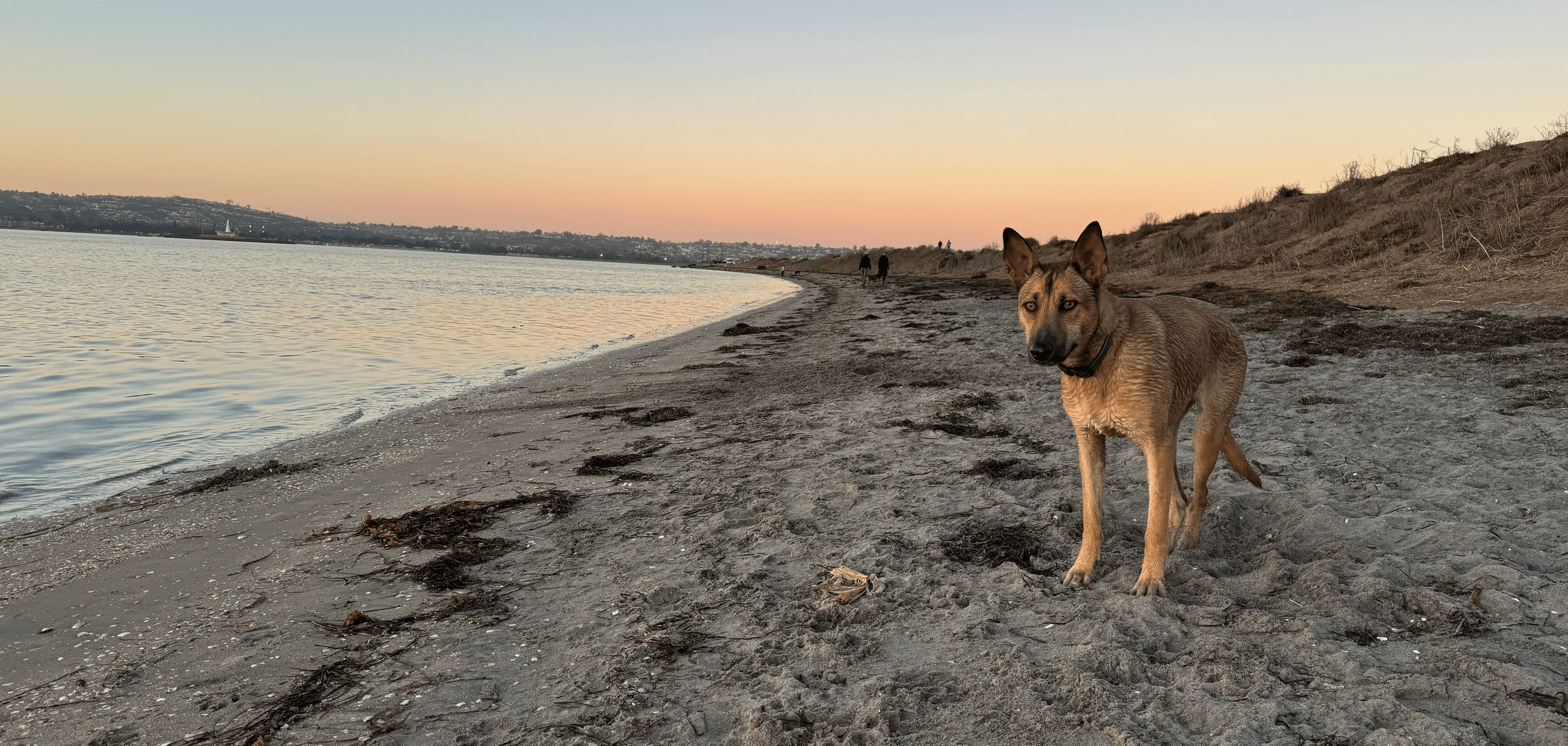
Gratuitous Pup Shot
A Timely Reframe
Out for a walk one day with the mischievous pup, I found myself listening to the Way of Integrity audiobook, written and narrated by Martha Beck. As with many books I consume designed to help me evolve my world view and “level up” so to speak, I scarcely made it past the introduction before epiphany struck.
I am a game designer.
Let me explain. As far back as I can remember, I’ve always loved both storytelling and games. I grew up immersed in movies and books as a way to escape, grow, and learn about the world. I’m convinced for example, that The Phantom Tollbooth forever shaped the way I think about the world. Likewise, games have always played an important role. Late-night games of gin and backgammon are a defining memory for me and my late father, who I admired deeply. Scrabble, Monopoly, Risk, Trivial Pursuit, and countless others were frequent centerpieces of game nights and rainy weekends growing up - most of which eventually gave way to things like Magic the Gathering, Settlers of Catan, Carcassonne, Celebrity, and Taboo.
In high school and college, I discovered video games and have spent more time than I care to admit breaking tackles and throwing touchdowns in Madden, taking over alien worlds in Starcraft, and playing the world’s nerdiest version of capture the flag, League of Legends - the last of which was a true saving-grace during pandemic isolation, as it allowed me to reconnect with a group of childhood friends.
I’ve even spent periods of my life supporting myself playing poker, which is another story altogether.
The epiphany isn’t solely that I want to start crafting games and experiences, although that’s certainly part of it - it’s that I'd actually been designing them all along.
Simon Sinek's The Infinite Game gave me language for what I'd been intuiting. Finite games have fixed rules and clear endpoints — someone wins, someone loses, it's over. But the most important games in life are infinite: the goal isn't to win, it's to keep playing. To stay in the game long enough to make a difference - to keep pursuing the mission.
Social entrepreneurship can be stressful. There’s the normal pressure of launching a company upon which oneself and others rely on for their livelihoods, but pile on a social purpose and commitments to vulnerable constituencies, and things reach much higher levels of importance.
I realized though, that I was constructing systems where the incentives aligned, where every player had a reason to stay at the table, where the rules rewarded improvisation and collaboration over dogma and competition. The game we’re playing at Altruous is to see if we can add more sensemaking, integrity, efficiency, and impact to philanthropy. We’re devising new strategies for driving resources to the most impactful programs, tackling the most important challenges of our time.
It’s game design whether we think of it that way or not, but choosing to think of it that way not only reduces the pressure, it opens up possibilities for redefining victory, inventing new strategies, and picking ourselves up and trying again after the inevitable setbacks.
Viewed this way, "I am a game designer" isn't a pivot. It's a recognition that I've always been one. The Missing Piece is a new and exciting way to express something that's been true about me all along.
Games as Practice and Modus Operandi
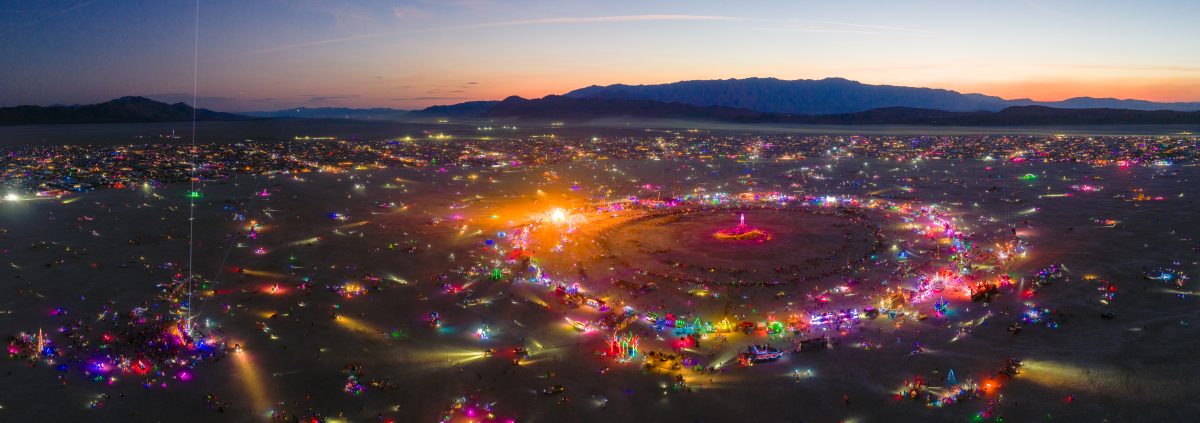
As fun and exciting as these games are on their face, I’ve recently become fascinated with the potential of games to drive human connection, tell very personal stories, and learn about how the world works. At Burning Man, I’ve embraced play as community building and built some incredibly immersive experiences for others, through the platform that running my own camp has provided. I make most of my life decisions using Expected Value frameworks instilled in the fiber of my being through poker.
Play is, if nothing else, practice for real life. There are prizes to be won, resources to spend, and myriad creative strategies to achieve them. There’s often luck, having to make decisions based on incomplete information, psychology, and gamesmanship. There’s the need to read other people and accurately assess the lay of the land.
The main difference is, when you win or lose a game with friends and adversaries, you can always wipe the slate clean and start over. Not so, with life - however, viewing life decisions through this lens can remove a lot of the unnecessary weight we put on everyday matters and “important” projects.
At the start of each day, I often find myself defining the game I want to play at that time. Each day, I’ll play the game of being as healthy as possible, as productive as possible, as compassionate as possible, or a source of support to one person or another. Then, I’ll set about defining the rules for each game, and how the game will be scored. Some days I’m better at winning these games than others, but I find that viewing my day through that lens helps to both focus my attention and effort, and lower the stakes (and therefore stress) involved. At the end of each day, I get to tally the scores, review key plays, and start fresh again in the morning.
A Serendipitous Stroll
Several years ago, at Burning Man, I was out for a morning stroll with a close friend who had accompanied me that year for the first time. It was the last day, and we found ourselves sifting through the ashes of The Man that had burned the night before. In those ashes, we found a board - burned on one side, and with a perfect circle cut out of the middle. That board still hangs in my home today, and has become a metaphor for the games I’m choosing to play and to build.
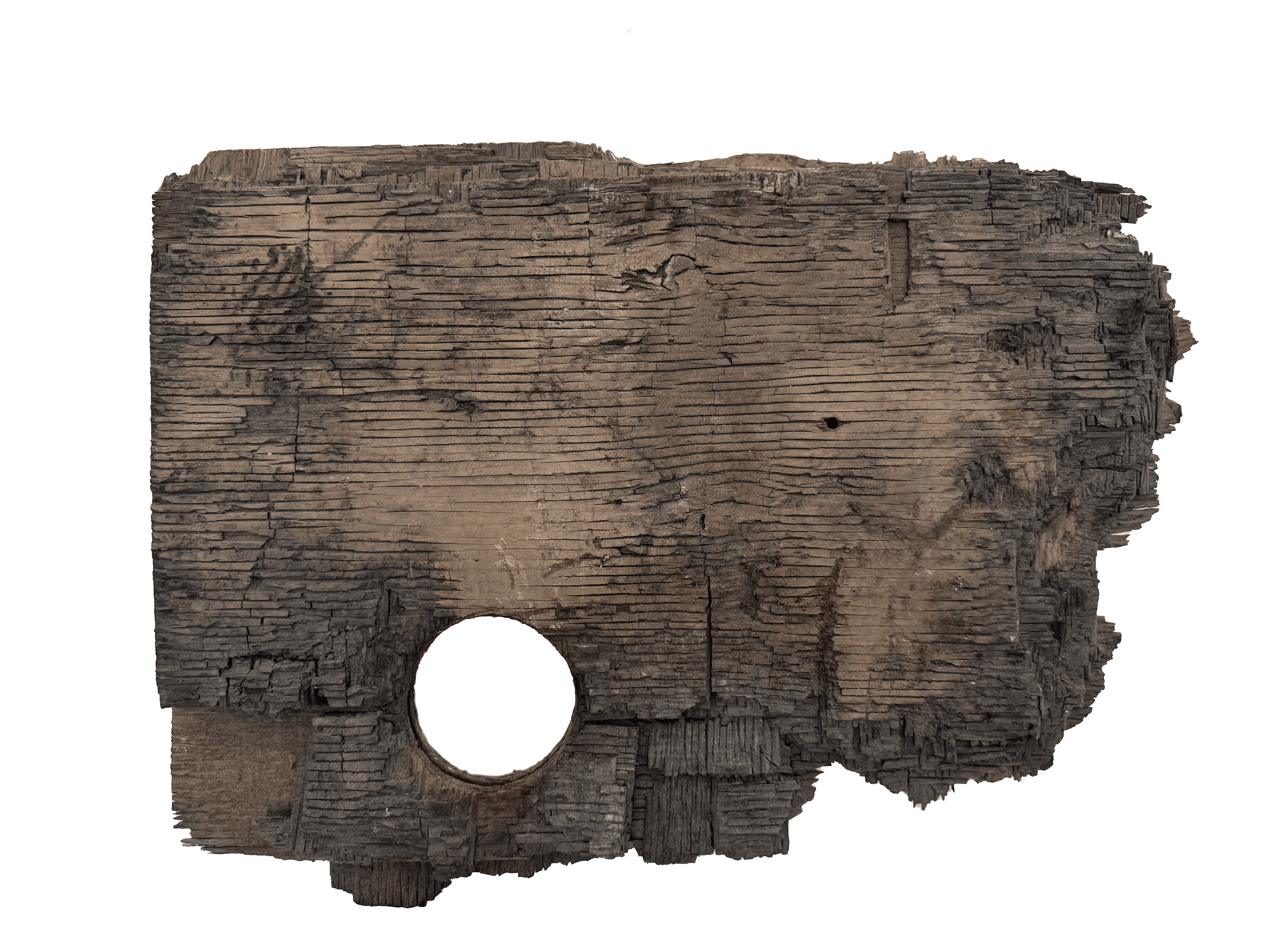
The Missing Piece is a nod to the great Shel Silverstein poem, but it also represents all the things that are important to us, that we too-often lose sight of in the pressures of modern society: compassion, community, connection, friendship, experimentation and acceptance of failure, choice. It’s the quiet moment, the pregnant pause, and the knowing look between old friends. It’s going out on a limb, trying something new, and taking bold action regardless of the consequences. It’s standing up for what’s right when fear, loneliness, and external forces are telling us not to. It’s doing something amazing because it gives us and others joy, and having that experience and memory of that joy be purpose enough.
So, that’s what The Missing Piece is. It’s a studio and collective dedicated to creating fun, unique, and remarkable experiences - games, stories, and real-life installations that move, inspire, foster connection, and help to change the way those who engage with them view the world.
Today, The Missing Piece is mostly a hobby, supported by myself and a few courageous strivers who dedicate their time, energy, elbow grease, and desire to expand their own horizons and limiting beliefs. Certainly the success of our projects requires doing things that are uncomfortable or not that enjoyable for each of us, but it requires us to learn and try new things, and crucially, the act of creation, done this way, is itself joyful, inspiring, and a gift to those who choose to participate.
TL;DR
Yeah, yeah, too late, I know.
But yes, the past several years have been a rollercoaster with incredible highs and lows, challenging climbs, breathtaking drops, and more than a few loop-de-loops and wipeouts. Viewed only as life and business, these vicissitudes can feel crushing, and successes deceptively final. But viewed as a game, they’re just points won and lost en-route to some far-off victory.
In the Sinek view, the games most worth playing are the ones we choose, daily and independent of obstacles in our way. We get to define victory and defeat for ourselves each time we sit down to play.
Impact work—the slow, frustrating, occasionally heartbreaking work of trying to bend the universe slowly toward justice — is still a game I’m committed to playing. Altruous is still worth building. The Missing Piece is worth building. So too are the myriad projects and purposes each one supports.
And who knows? Maybe the two games aren't as separate as they seem. Maybe the skills I'm building here — designing experiences that foster connections, that help people see the world differently—will find their way back into the impact work. Maybe The Missing Piece becomes something bigger. Or maybe it stays exactly what it is: a passion project that brings joy and expands horizons for myself and everyone who’s a part of it.
Either way, I'm still in the game, defining victory and devising strategy, with a renewed sense of purpose, and what a joy and privilege it is to still be able to play.
___